
04.06.2026
Infill Formwork Panels: Precision Fit and Structural Reliability
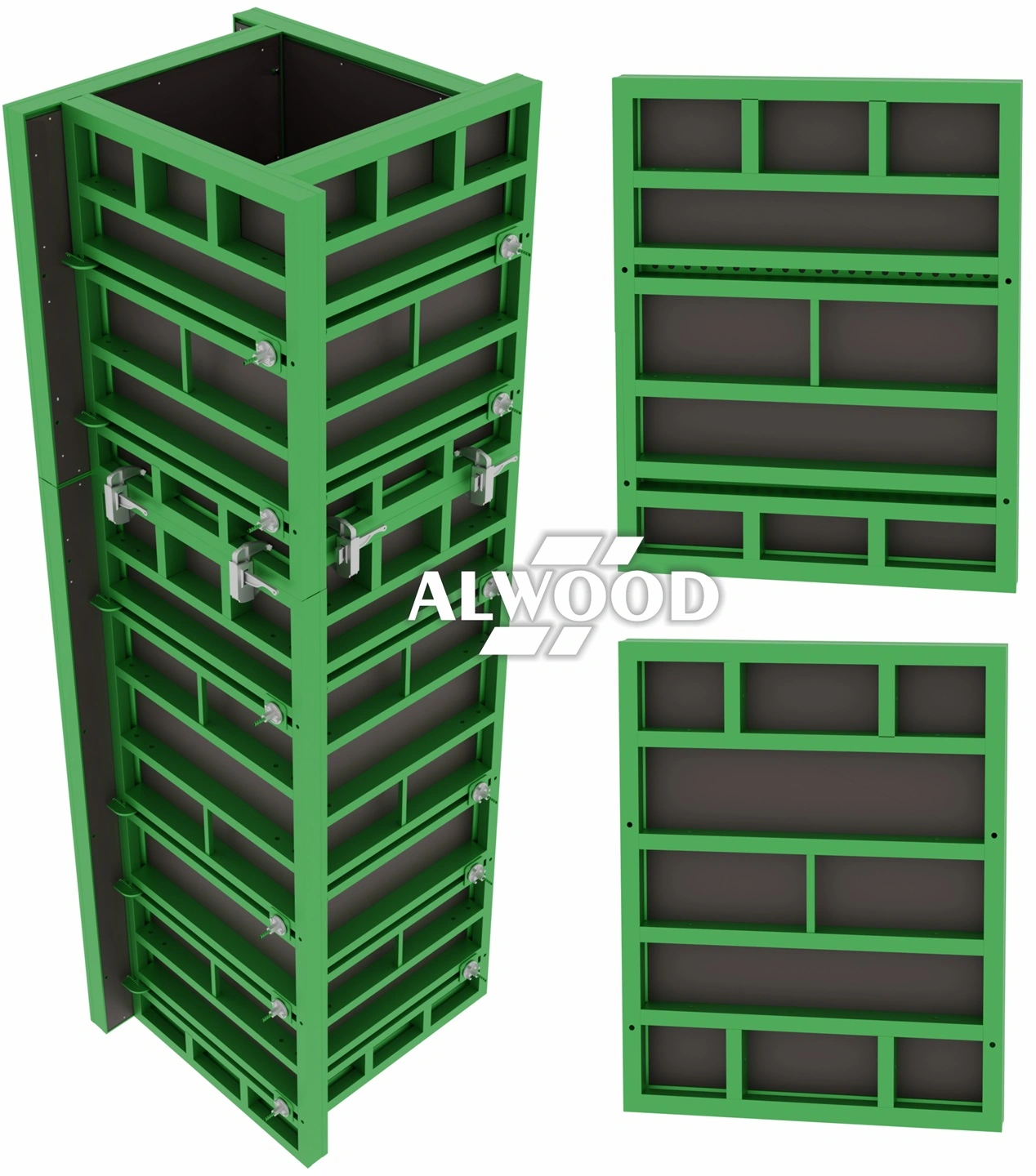
In monolithic construction, not only the quality of the main formwork elements is important, but also the ability to accurately adapt the system to the specific parameters of a project.
To solve this task, infill formwork panels are used. These elements help close non-standard sections, maintain the geometry of the structure, and ensure precise connections within the formwork system.
The use of such panels speeds up installation and helps avoid unnecessary costs when concreting complex structures.
The most common planning mistake is underestimating their importance. Infill panels are either not included in the project design or are ordered in insufficient quantities.
As a result, improvisation begins on the construction site. And in monolithic construction, improvisation always means additional risk.
What Are Infill Formwork Panels?
These are additional formwork elements designed to compensate for missing dimensions between standard panels. They are used in areas where standard panels cannot fully cover the required surface.
For example, if a wall height is 3,500 mm and only 3,000 mm panels are purchased, the missing 500 mm is often covered with plywood or other improvised materials, even though ready-made infill panels are specifically designed for this purpose.
These components are used in the construction of walls, columns, corners, and other areas with non-standard geometry.
Infill panels are not an auxiliary element but an essential part of the formwork system. They do not perform the main work, but they make the system complete.
Main Functions of Infill Panels
- close gaps between standard panels;
- maintain accurate structural dimensions;
- ensure system tightness and sealing;
- increase formwork stability;
- simplify installation in complex areas;
- reduce cutting, modifications, and on-site adjustments.
The use of infill panels makes the formwork system more versatile and adaptable.
Advantages of ALWOOD Infill Panels
- Precise structural adjustment. These elements quickly compensate for missing dimensions without affecting formwork geometry, which is especially important for projects with complex architectural designs.
- Reduced labor costs. Without additional panels, installers often need temporary solutions or manual adjustments. Our panels significantly speed up system assembly.
- Improved concreting quality. Tight connections between components help prevent concrete leakage and improve the quality of the finished surface.
- Versatile application. Our panels are suitable for various monolithic structures and are compatible with most modern formwork systems.
Why Quality Matters
Low-quality panels can lead to formwork deformation, concrete leakage, and dimensional inaccuracies. Durable and properly selected panels help prevent defects and ensure reliable system performance.
In addition, high-quality elements have a longer service life and can withstand multiple usage cycles without losing strength.
This raises a simple question: what is more important — assembling a structure formally or assembling it correctly? The answer ultimately determines the final result.
Formwork solutions from ALWOOD help solve even the most challenging construction tasks with simple and reliable solutions.
Share